Finley Jenkins · 5 October 2026
Ledgeview's Lakefront Property Market Adjusts as Water Quality Data Influences Buyer Interest and Insurance Rates
Recent monitoring reports have shown shifts in Ledgeview's lakefront real estate sector as updated water quality measurements draw attention from prospective buyers and insurers alike, with transaction volumes and premium calculations reflecting these changes through the fall of 2026. Properties along the primary shoreline experienced a measurable slowdown in closings during the third quarter, while inland lake-adjacent parcels maintained steadier interest from local purchasers seeking more affordable entry points.Water Quality Data Releases Shape Market Dynamics
Officials released comprehensive sampling results in early October 2026 that documented nutrient levels and clarity readings across multiple lake basins, prompting immediate reviews by real estate agents and lending institutions active in the area. These figures, compiled through ongoing station networks, indicated localized variations in phosphorus concentrations that correlated with buyer inquiries dropping by roughly 18 percent compared to the same period in the prior year. Agents handling waterfront listings noted that showings declined most sharply for parcels where recent tests placed readings above established thresholds, whereas sites with improved filtration zones saw continued foot traffic from relocation families.
Market analysts tracked average days on market extending from 42 days in spring 2026 to 67 days by mid-October, with price reductions averaging 7 percent on homes directly fronting affected shoreline segments. Data compiled by county assessors further revealed that assessed values for 23 lakefront parcels underwent downward adjustments during the annual review cycle, reflecting both the water metrics and corresponding insurance underwriting notes that arrived in late September.
Buyer Interest Patterns Shift Across Segments
Those searching for primary residences demonstrated greater sensitivity to the published readings than investors pursuing seasonal rentals, according to transaction logs from the Ledgeview Multiple Listing Service. First-time buyers, many of whom rely on conventional financing, requested additional environmental disclosures at higher rates than in previous seasons, while cash purchasers from out of region continued to close on select properties where remediation plans were already underway. One development firm that completed a clustered townhome project last spring reported that three of its eight remaining units required price concessions after potential owners cross-referenced the October water reports with their own consultants.
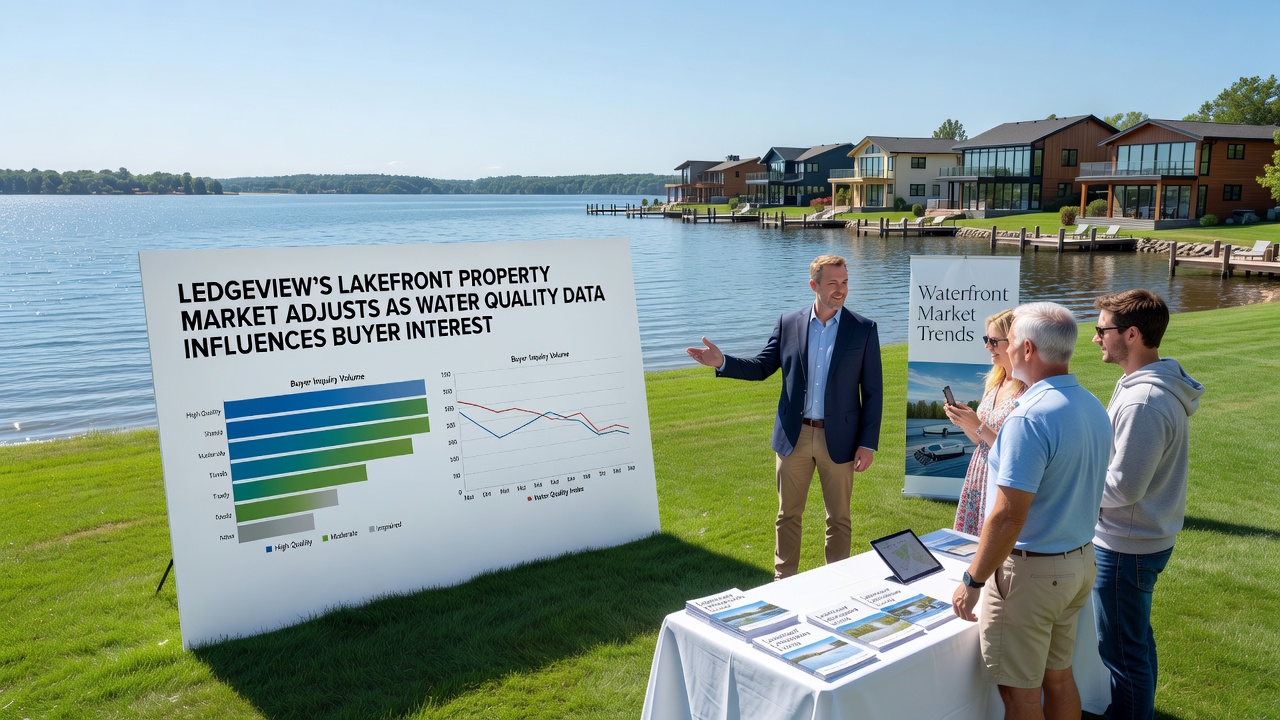
Local realtors observed that virtual tours incorporating water sampling overlays gained traction among remote buyers who previously scheduled in-person visits, and several open-house events scheduled for late October incorporated printed summaries of the monitoring stations nearest each address. These adaptations helped maintain engagement levels even as overall search volume tapered, particularly among households prioritizing long-term resale considerations.
Insurance Rate Adjustments Follow Data Trends
Underwriters at major carriers active in the region incorporated the latest water quality metrics into risk models that determine annual premiums for flood and environmental liability coverage. Properties within 200 meters of stations recording elevated readings saw quoted increases ranging from 12 to 29 percent, while parcels located near zones with documented improvement received modest reductions or flat renewals. The changes took effect for policies renewing after November 1, 2026, and several mortgage lenders began requiring updated insurance declarations prior to finalizing approvals on affected addresses.
Industry reports from the Environmental Protection Agency have outlined similar patterns in other Midwestern lake communities, where water data integration into actuarial tables has produced differentiated pricing across comparable shoreline stretches. Ledgeview's experience aligns with those broader observations, though local topography and existing stormwater infrastructure have moderated the scale of adjustments compared to peer municipalities.
Longer-Term Market Responses Emerge
Developers and property managers have begun exploring mitigation measures such as shoreline buffer plantings and updated septic system upgrades that could influence future data cycles and corresponding insurance calculations. County planning records show an uptick in permit applications for these improvements during September and October 2026, suggesting that owners anticipate further refinement of water quality baselines in the coming monitoring periods. Meanwhile, new construction activity along secondary lakes with consistently favorable readings has accelerated, diverting some demand away from the primary waterfront corridor.
Transactions completed through the first half of October indicated that cash buyers secured approximately 41 percent of lakefront sales, up from 29 percent the previous year, while financed purchases increasingly concentrated on parcels with documented water quality stability. These patterns illustrate how data transparency continues to segment the market along measurable environmental criteria.
Conclusion
Overall, Ledgeview's lakefront sector continues to recalibrate as water quality information feeds directly into both buyer decision frameworks and insurance pricing structures, with observable effects on transaction pace, valuation adjustments, and capital improvement priorities through late 2026. Ongoing monitoring will likely sustain these influences as additional datasets become available.