Vera Vogel · 7 September 2026
Ledgeview Fiscal Assessments Reveal Trade-Offs Between Cultural Programs and Law Enforcement Allocations Amid Rising Operational Demands
Local budget documents released in September 2026 detail how Ledgeview officials must balance funding for cultural initiatives against law enforcement needs while operational expenses continue to climb across departments. The assessments compile revenue projections alongside expenditure forecasts that highlight specific line items where reallocations become necessary to maintain service levels.
Budget Overview and Key Figures
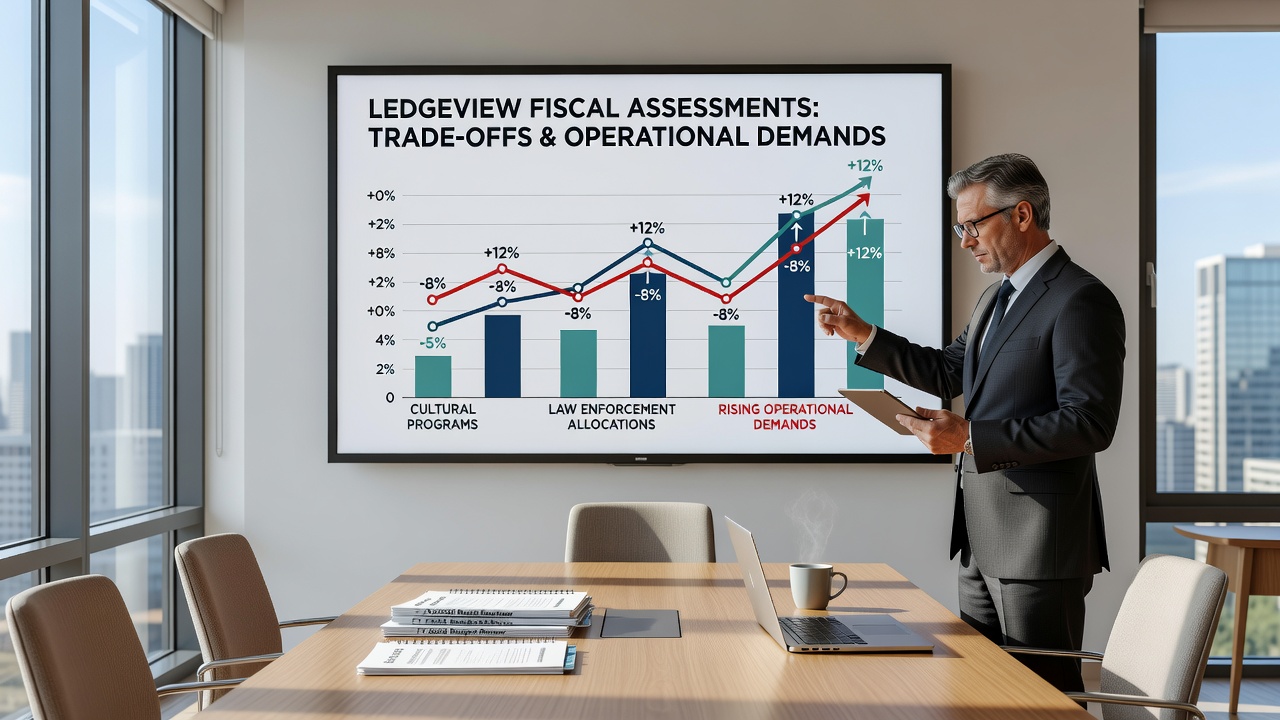
Revenue streams from property taxes and state aid form the core of Ledgeview's general fund yet fall short of covering projected costs by several percentage points according to the latest municipal ledger. Data compiled by town finance staff shows cultural program allocations currently stand at roughly 12 percent of discretionary spending while law enforcement commands approximately 28 percent of the same pool. Rising operational demands stem from increased personnel costs, equipment upgrades, and compliance requirements that affect both areas equally yet compete for the same finite resources.
Analysts who reviewed the September 2026 reports note that utility and insurance premiums alone rose 9 percent year over year, squeezing available margins further. Those figures come directly from audited statements rather than estimates, providing a clear baseline for the trade-off calculations now underway.
Impacts on Cultural Programs
Cultural allocations support library operations, community arts grants, and seasonal events that draw participation from several thousand residents annually. The assessments outline scenarios where modest reductions in these areas could free funds for other priorities without eliminating services outright. One modeled option trims event staffing by two part-time positions while preserving core library hours, a change that would redirect approximately $45,000 toward higher-priority line items.
Program administrators have already adjusted some vendor contracts to lock in current rates before further increases materialize. These adjustments appear in the supporting schedules attached to the main assessment document and demonstrate proactive steps already taken within existing cultural budgets.
Law Enforcement Allocation Pressures
Law enforcement budgets face parallel pressures from overtime requirements, vehicle replacement cycles, and training mandates tied to state standards. The September 2026 assessments project that patrol staffing costs will increase another 7 percent by the end of the next fiscal year due to wage adjustments and benefit escalations. Equipment line items for body-worn cameras and dispatch software upgrades add additional fixed costs that cannot be deferred without risking operational gaps.
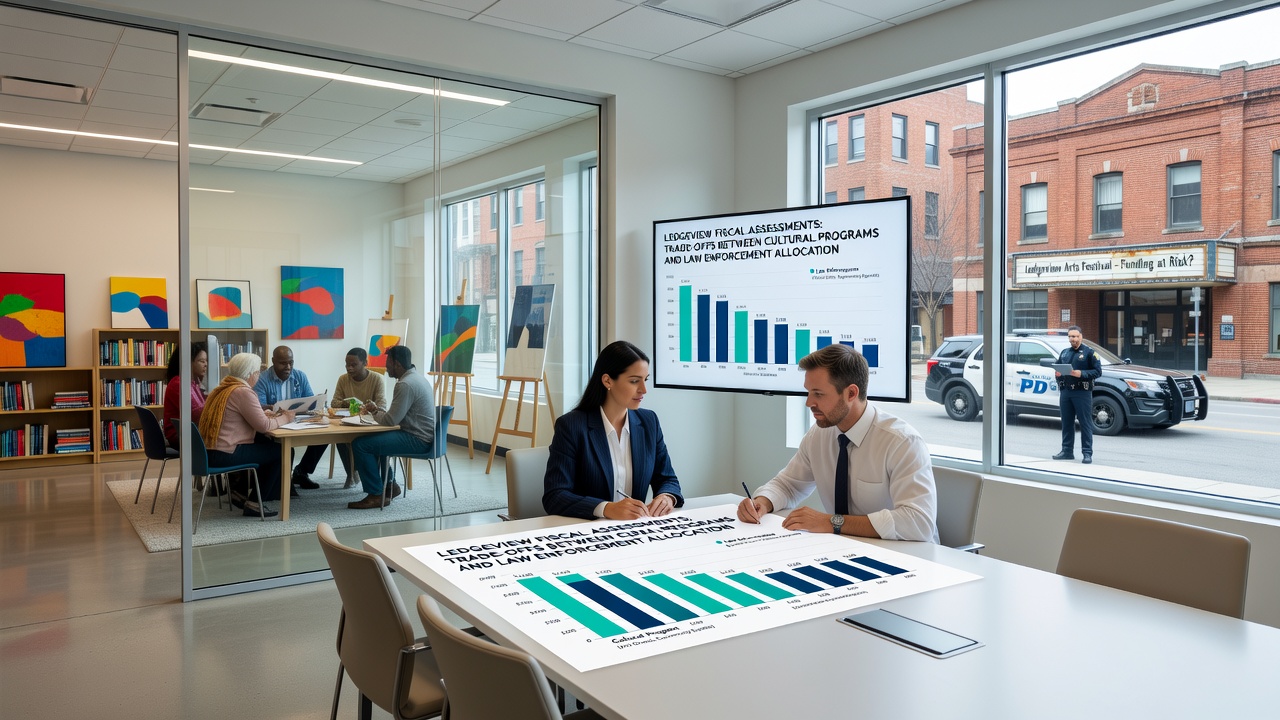
Officials have explored grant opportunities through federal channels to offset some capital needs, yet the assessments indicate that matching requirements would still draw from the general fund. This creates another layer of competition with cultural programs that also rely on discretionary dollars for special projects.
Comparative Data from Other Municipalities
Similar fiscal patterns appear in neighboring communities where assessments have likewise documented rising operational demands across public safety and recreational services. According to local government finance data from the U.S. Census Bureau, many mid-sized towns report comparable percentage shifts in allocations over the past three budget cycles. These external benchmarks help Ledgeview planners contextualize their own trade-off decisions without assuming unique circumstances.
Researchers at regional planning organizations have compiled case examples from towns of similar size that chose to consolidate certain cultural events with neighboring municipalities to achieve cost savings. The assessments reference these examples as potential models rather than prescriptions, leaving final decisions to Ledgeview's elected body.
Next Steps in the Assessment Process
Public hearings scheduled through the remainder of 2026 will allow department heads to present detailed impact statements tied to each funding scenario outlined in the reports. The assessments themselves stop short of recommending specific cuts and instead map multiple pathways that maintain statutory obligations while addressing the documented shortfalls. Finance staff will update the models after each hearing to reflect any new revenue or expenditure information that surfaces.
Those updates will feed into the final budget proposal due before the start of the new fiscal year, giving decision-makers a running tally of how choices in one area ripple through others.
Conclusion
The September 2026 fiscal assessments provide Ledgeview with a structured framework for weighing cultural program support against law enforcement needs amid steadily increasing operational demands. By presenting concrete figures and multiple allocation scenarios, the documents equip officials and residents with the information needed to navigate the required adjustments in a transparent manner. Further refinements will occur as additional data becomes available and as public input shapes the final budget outcomes.