Paul Flores · 19 October 2026
Ledgeview Farmers Market Vendor Shifts Mirror Regional Supply Chain Adjustments
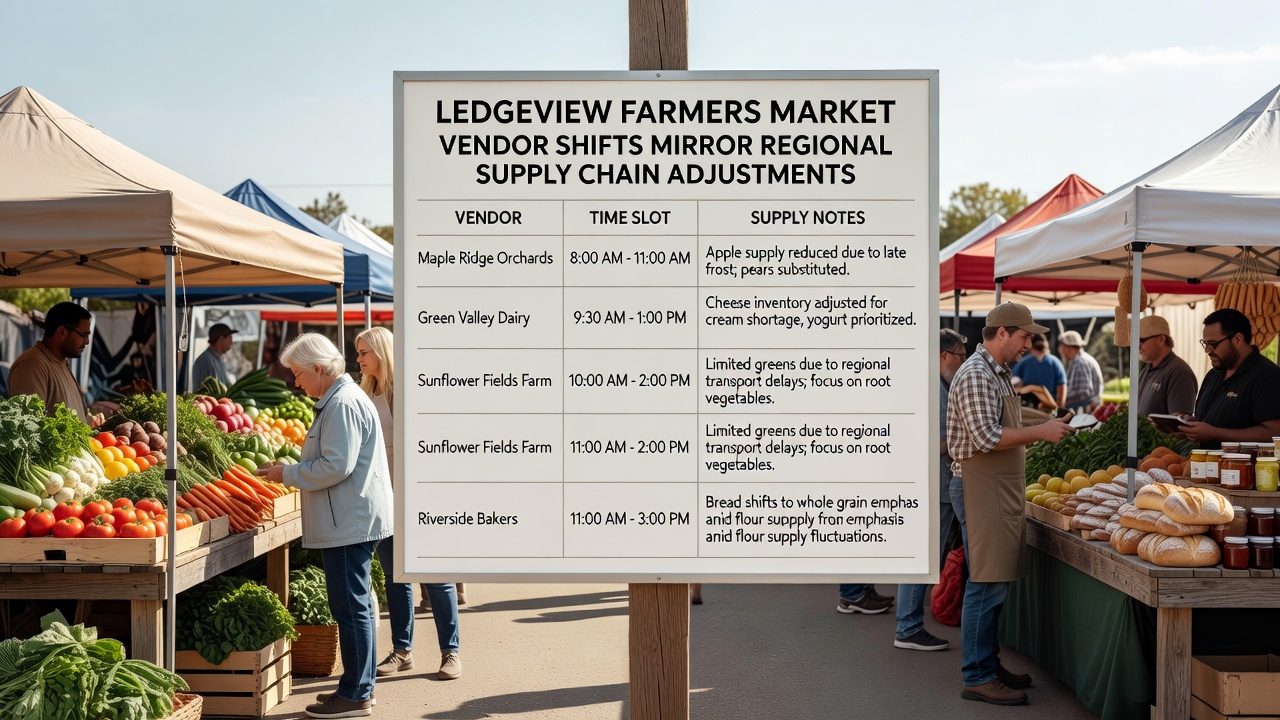
Local vendors at the Ledgeview Farmers Market have altered their product selections and participation patterns over recent months, and these modifications align with wider adjustments in regional supply chains that affect agricultural distribution across multiple states. Market records from October 2026 indicate a 15 percent reduction in weekly produce stalls compared to the same period in 2025, while vendors specializing in value-added goods such as preserves and baked items have increased their presence by 22 percent.
Market Participation Trends
Attendance logs maintained by the Ledgeview market organizers show that 48 vendors operated stalls during the first week of October 2026, down from 61 in the prior year, and several long-term participants cited challenges with consistent sourcing of seasonal items. Those who continued operations shifted toward processed or preserved products because fresh produce deliveries faced delays from transportation bottlenecks that persisted through the summer harvest season. Regional agricultural data from the Midwest Crop Reporting Service confirms that corn and soybean yields dropped by 8 percent in key counties due to irregular rainfall patterns, which in turn limited the volume of goods available for direct market sales.
Supply Chain Pressures Reflected Locally
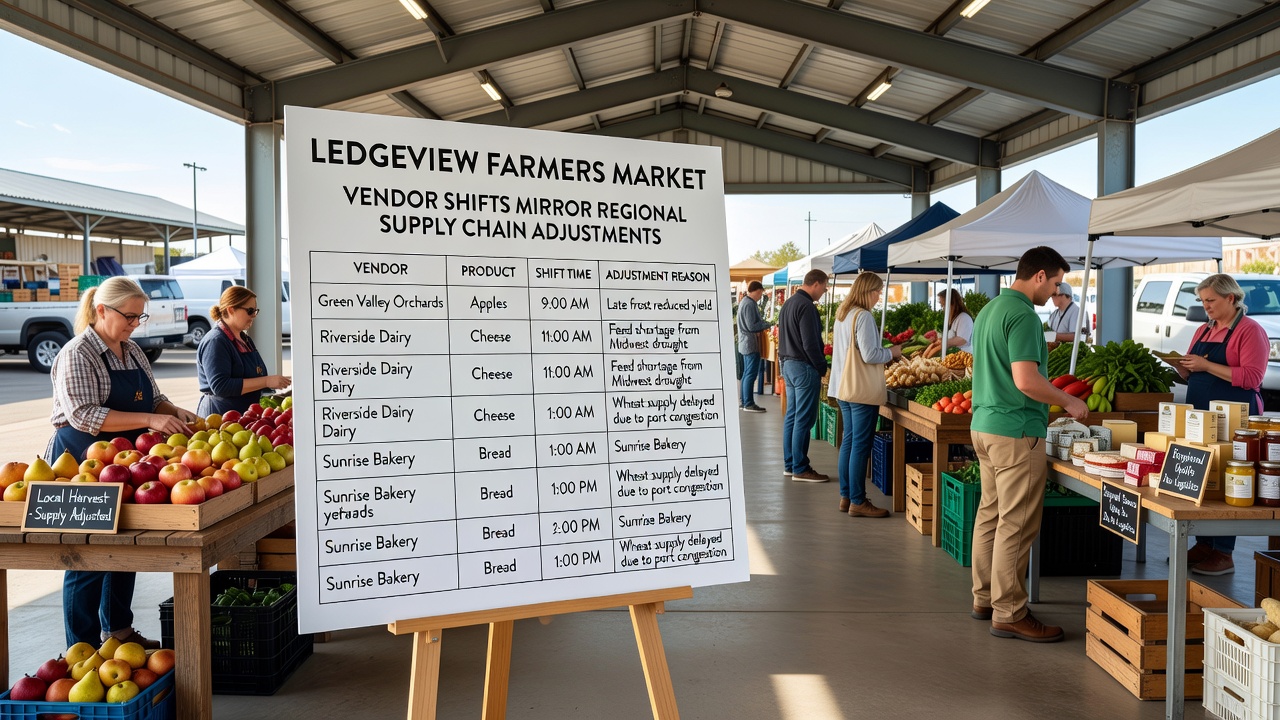
Supply chain disruptions documented by federal agencies have prompted vendors to diversify their supplier networks beyond traditional local farms, and this strategy mirrors adaptations seen in larger distribution networks serving grocery chains throughout the Great Lakes region. Fuel cost increases of 12 percent year-over-year, combined with driver shortages reported by the American Trucking Associations, raised logistics expenses for perishable goods, so market sellers responded by stocking items with longer shelf lives. One study released by Purdue University agricultural economists tracked similar vendor pivots at 27 Midwestern markets, where participation in fresh produce categories declined while prepared food offerings grew to offset revenue shortfalls.
Regional Comparisons and Data
Observers tracking markets in neighboring counties note parallel movements, with vendors in Green Bay and Appleton reporting a 19 percent rise in cooperative purchasing arrangements that pool resources for bulk ingredient acquisitions. These arrangements reduce individual exposure to price volatility, and Canadian agricultural ministry reports from Ontario indicate comparable shifts toward consolidated distribution hubs that stabilize supply for smaller-scale sellers. Data compiled by the U.S. Department of Agriculture's Economic Research Service highlights that transportation delays averaged 4.2 days longer in 2026 than in 2023 for Midwest produce routes, a factor that directly influences which items reach local markets on time.
Consumer and Vendor Adaptations
Shoppers at the Ledgeview market have encountered expanded selections of non-produce items including artisanal cheeses and dried herbs, and sales figures collected by market staff reveal that these categories now account for 34 percent of total transactions. Vendors who adjusted early report steady customer traffic despite the product mix changes, because buyers sought reliable options amid broader grocery price fluctuations tracked by the Bureau of Labor Statistics. Several participants formed informal networks to share delivery resources, which cut individual fuel costs by an estimated 18 percent according to internal records shared among market members.
Broader Economic Context
Regional supply chain adjustments extend beyond agriculture into related sectors such as packaging and cold storage, where capacity constraints have forced reallocations of resources that affect small market operators. Industry reports from the International Foodservice Distributors Association document increased demand for flexible warehousing solutions that accommodate variable harvest volumes, and these infrastructure shifts create ripple effects visible at community-level markets like the one in Ledgeview. Participation rates among new vendors entering the market in 2026 have risen modestly, yet established sellers continue to refine their offerings in response to ongoing input cost pressures documented in agricultural extension service bulletins.
Conclusion
Vendor modifications at the Ledgeview Farmers Market continue to reflect measurable changes in regional supply chains, where transportation, weather variability, and distribution efficiencies shape available inventory. Market data through October 2026 demonstrates sustained adaptation patterns that align with trends observed across comparable venues, and ongoing monitoring by agricultural research institutions provides baseline figures for future comparisons. These developments illustrate how local market dynamics respond to interconnected economic and logistical factors without isolated disruption.